Expertise
Sculpted concrete

Developed by David Tarragó for beauty and realism, sprayed concrete is our first choice for its strength and longevity. The older it gets, the more beautiful it is.
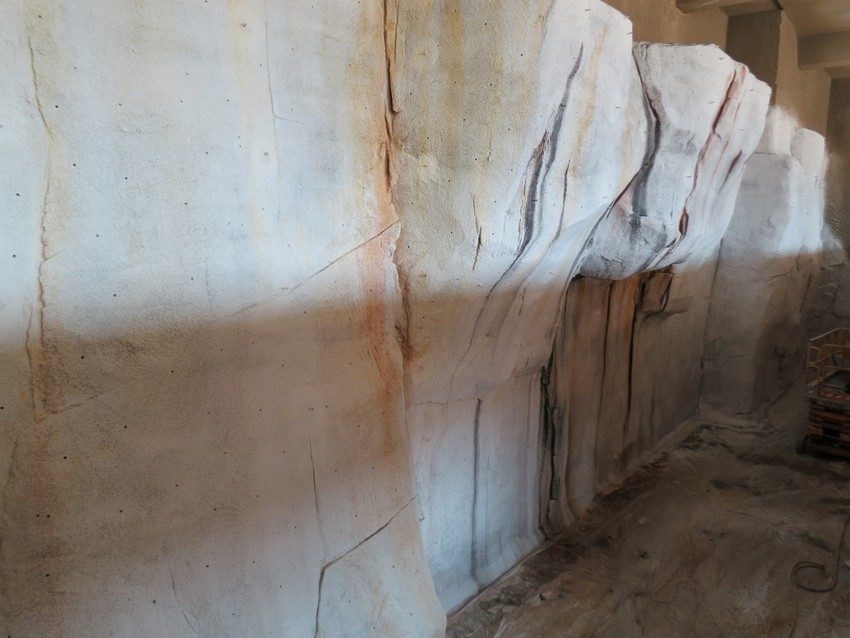
It can imitate every kind of rock. That takes a very particular know-how: every relief, every crack, every shade is shaped by hand, on site.
From structure to patina
-
01
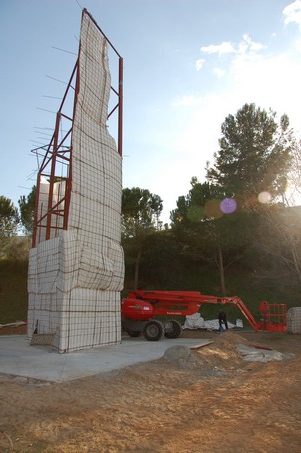
Design and engineering
Each piece is first designed around the client’s wishes, then engineered by our team.
-
02
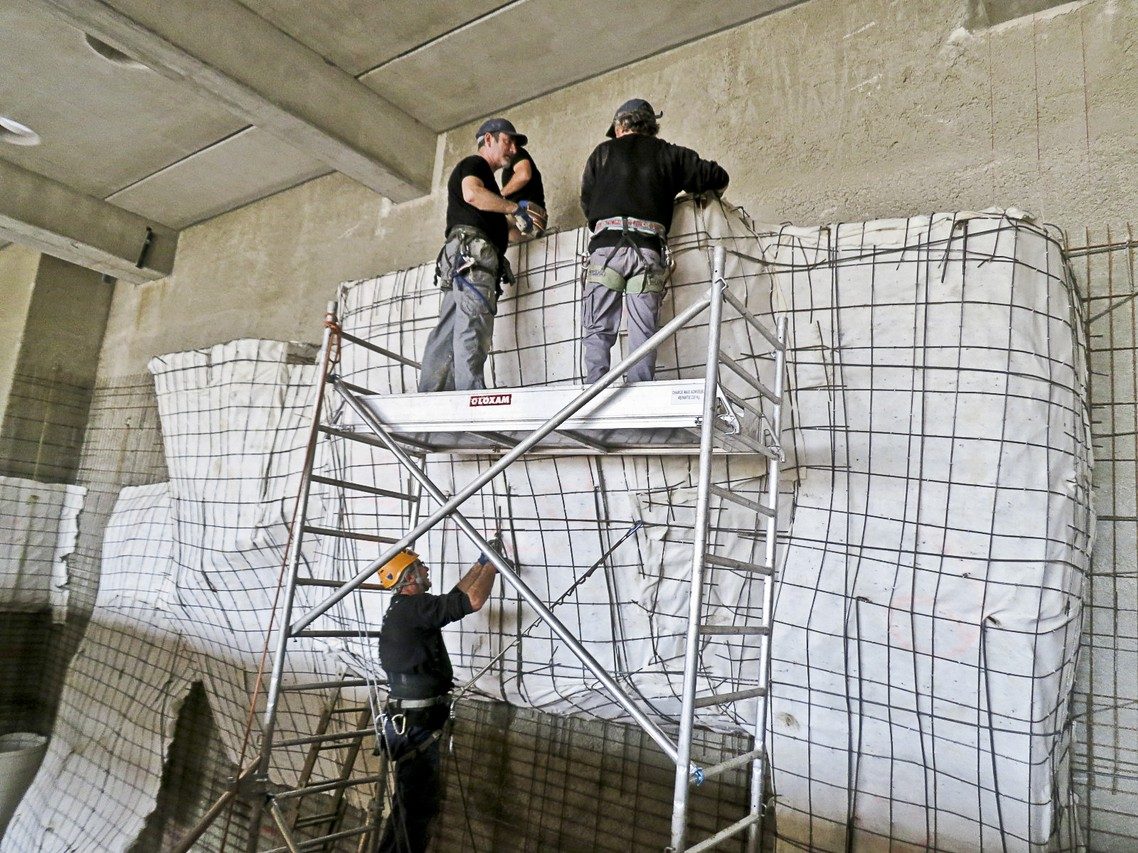
Structure and mesh
The mesh panels are suspended, linked together and fixed to the wall. A geotextile made exclusively for Tarragó is stapled onto them.
-
03
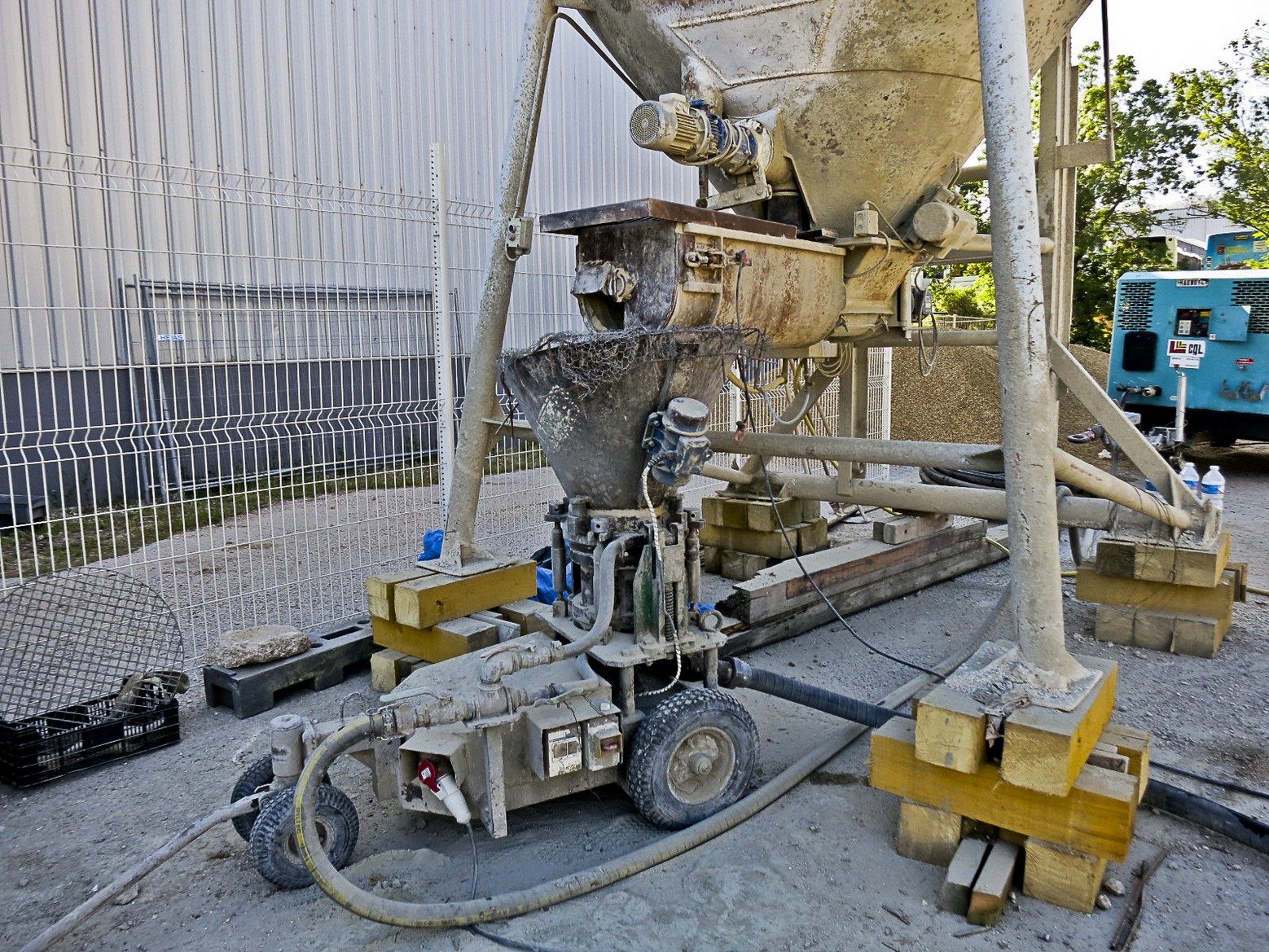
Spraying
The silo feeds the spraying machine; the compressor provides the power to spray the concrete with force.
-
04
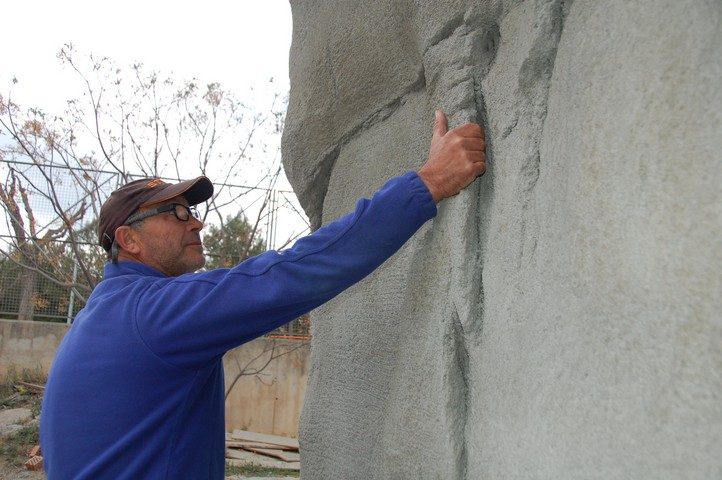
Hand sculpting
Before it sets, the concrete is sculpted by hand: strata, cracks, flakes, corners. This is where the rock is born.
-
05
Colour and patina
We paint the rock in the colours of its setting: Martorell’s ochre, the white of the Calanques, or to the client’s taste.


Three materials
Our pieces are built in concrete, wood or resin. Click a material to see examples.
Our material of choice. It allows any three-dimensional shape, accepts anchors anywhere and needs almost no maintenance. It is the only material in which cams and nuts can be placed in the cracks.


Probably the first material used in climbing, and the simplest. Less spectacular, but excellent value. Plywood averaging 22 mm, tested to the UNE-EN 12572 standard.


A glass-fibre mix with rock-like textures, shaped in our workshop and assembled on site like a puzzle. Thinner and more fragile than concrete, it requires annual maintenance.


Sculpture details


TAP, a Tarragó invention
In 2025, David Tarragó invented the TAP, to pass on to young climbers the technique of adventure climbing, where only the belay stations are equipped. The TAP has passed the pull tests of the UNE-EN 12572 standard: you can hang from it and fall on it.
Climbers can practise placing their own protection safely, before taking risks in the mountains.


Maintenance and certification
The European standard UNE-EN 12572 requires an annual inspection. We carry out the full review, the tests with certified equipment and any necessary work, then issue the certificate. Maintenance and certification by the same team saves you time and money.